The Quick Answer
A single room takes one to two days of work. A full house takes three to five days. You can walk on floors lightly after 24 hours. Furniture goes back after 48 to 72 hours. Area rugs should wait 7 to 10 days. The timeline depends on how many coats of finish are applied and how humid it is in Dubuque when the work is being done.
Day-by-Day Timeline for a Typical Job
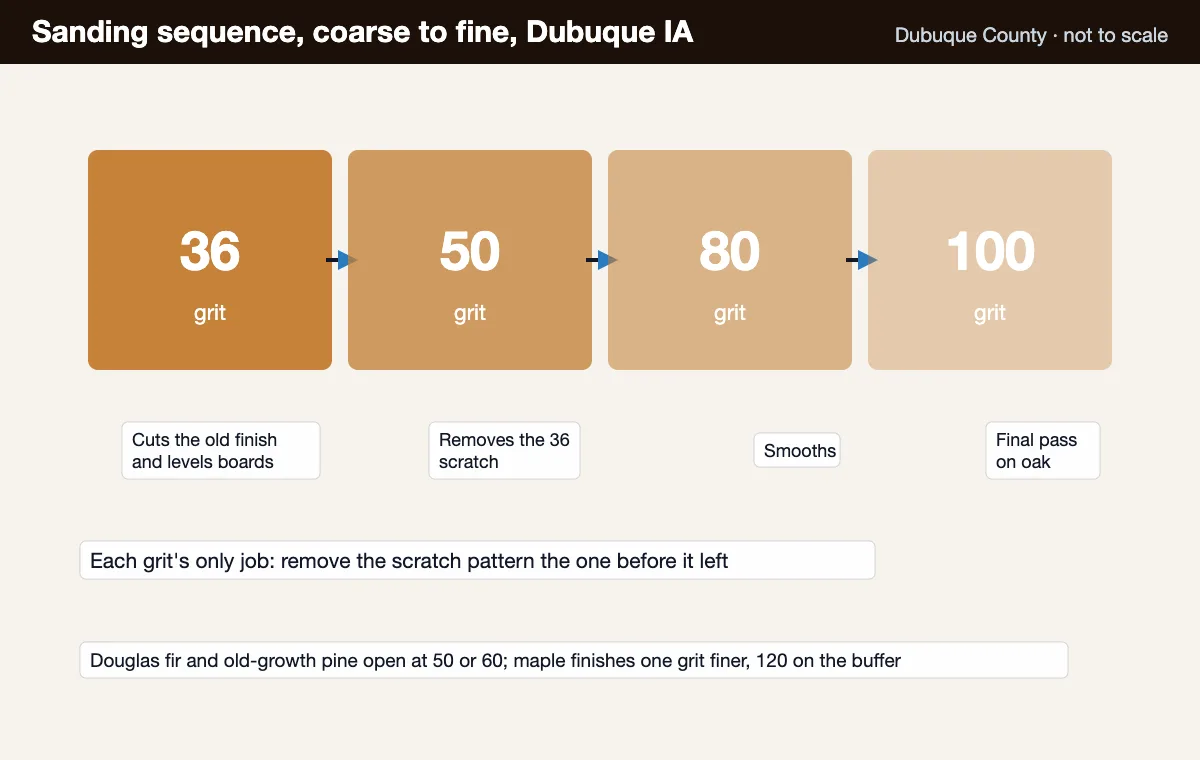
Day 1: Sanding
The first day is sanding. For a standard room, this takes three to six hours depending on floor condition, species, and whether any board repairs are needed. Sanding starts with coarse grit to remove the old finish and level the floor, moves to medium grit to remove sanding marks, and finishes with fine grit for a smooth surface. Edge work and corners are done by hand.
After sanding, the floor is cleaned thoroughly. If stain is being applied, it goes down at the end of day one and allowed to penetrate overnight.
Day 2: First Finish Coat
The first coat of finish is applied. For water-based polyurethane, this coat dries in two to four hours and can be lightly screened and recoated the same day in good conditions. For oil-modified polyurethane, the first coat takes longer to cure, typically eight hours minimum, and the second coat is usually applied the next day.
Day 3: Second Coat (and Third If Needed)
Most refinishing jobs use two to three finish coats. The final coat going on day two or day three completes the job. A light screen between coats helps adhesion.
When Can You Walk on the Floors?
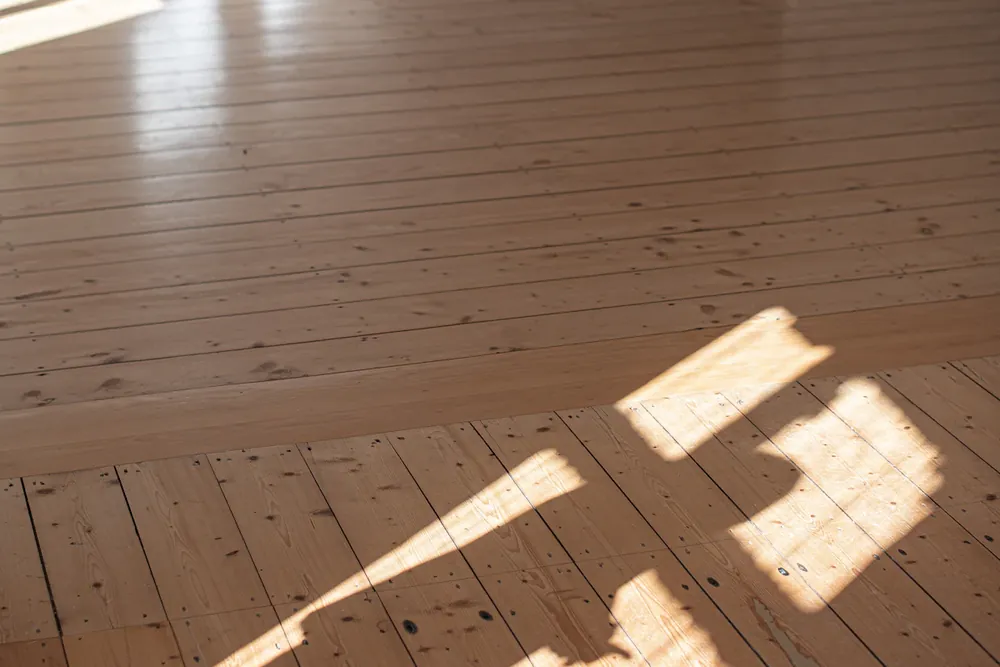
Light foot traffic (socks only, no shoes) is typically safe 24 hours after the final coat. This assumes normal temperature and humidity. In Dubuque's humid summers, finishes can take slightly longer to cure. Ask for the exact timing at the end of the job.
When Can Furniture Go Back?
Most furniture can be moved back 48 to 72 hours after the final coat. Use felt pads on all chair and table legs. Heavy furniture like sofas should have wide felt pads so the weight is distributed. Avoid dragging anything across the floor for the first two weeks.
When Can You Put Rugs Back Down?
Wait 7 to 10 days before replacing area rugs. Rugs trap off-gassing vapors from curing finish, which can cause the finish to stay soft and print the rug texture into the surface. This is the most commonly ignored timing rule and causes the most callbacks.
Screen and Recoat Timeline
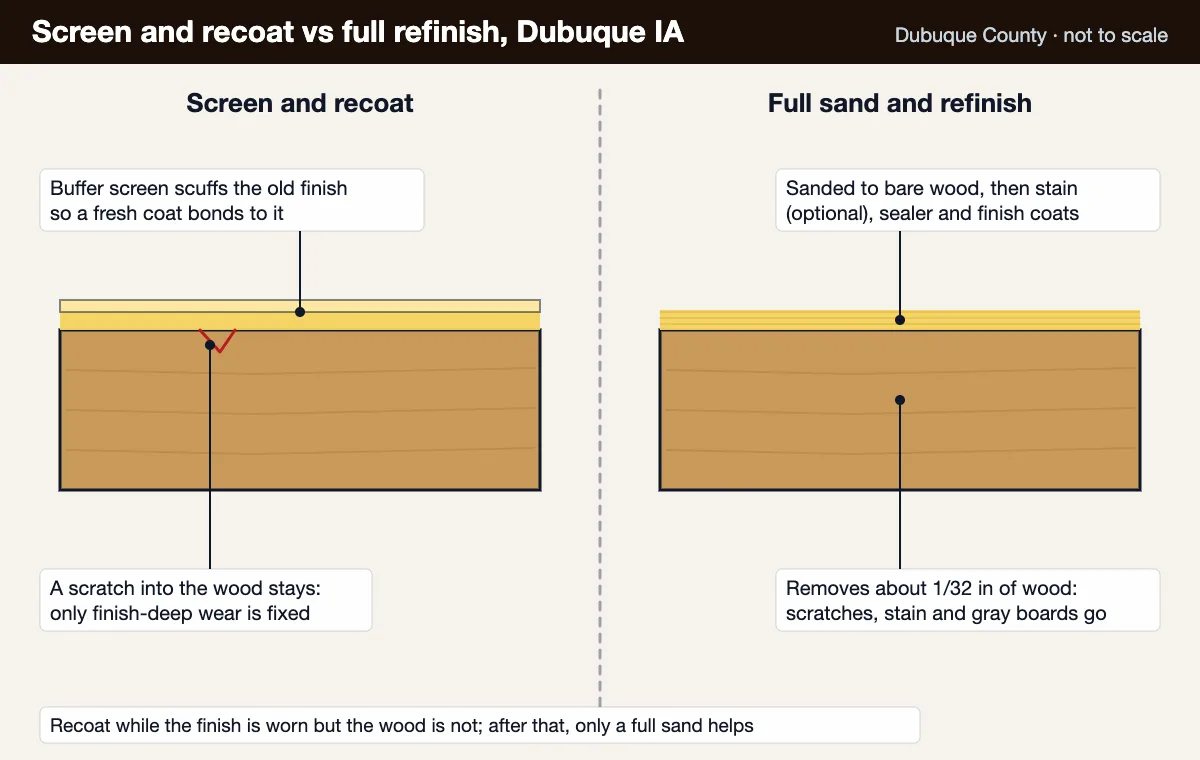
A screen and recoat job takes less time than a full refinish. Buffing and applying one or two new coats can often be done in a single day, with the same 24-hour walk-on and 72-hour furniture replacement guidance applying to the new coats.
Cold-Weather Cure Considerations for Dubuque Winters

Refinishing in a Dubuque winter is entirely doable, but the timeline behaves differently and the house has to be managed deliberately. Skipping this is how a floor ends up with a soft, cloudy, or blushed finish that has to be redone.
Almost every floor finish has a minimum application and cure temperature, generally around 60 to 65 degrees at the floor surface, and waterborne products are stricter about it than oil-modified. Waterborne polyurethane cures by coalescence: the water leaves, and the resin particles fuse into a continuous film. Below the product's minimum film-forming temperature that fusion never completes, and you get a film that looks fine and stays soft, marks easily, and fails early. You cannot fix it by waiting. It has to come off.
The practical Dubuque problem is that the floor is colder than the room. In January, a floor over an unheated basement or a crawl space in a North End or bluff-side home can sit ten degrees below the thermostat reading. A careful crew takes surface temperature at the floor, not air temperature at the wall, and it's worth knowing that a 68 degree thermostat does not guarantee a 68 degree floor.
What this means for your schedule and your house:
- Hold the house at 65 to 70 degrees for the entire job and for at least 72 hours after the final coat. Do not turn the heat down to save money while you're staying somewhere else. This is the most common and most expensive winter mistake.
- Do not ventilate by opening windows. Dumping 15 degree air into a curing room drops the surface temperature below spec in minutes. Odor management in winter comes from product choice, not from airflow.
- Expect oil-modified polyurethane to add roughly a day to a three-coat job in the heating months. Cold slows the oxidative cure that oil-modified relies on.
- Turn off any whole-house humidifier during waterborne cure. The water in the finish has to leave the film, and it leaves faster into dry air. Very dry January air is actually an advantage for waterborne, which is the one thing winter gives you for free.
- Run the furnace on its normal cycle with gentle air movement in the room, not a fan blowing directly on the wet finish. Direct air flow skins the surface before the body cures underneath.
- Add a day of buffer to your move-back plan. Cold cures slower even when everything is done correctly.
For winter work in an occupied Dubuque home, waterborne finish is usually the right call: low odor, so you can stay in the house without ventilation, and a faster recoat window so the job wraps in fewer days of living around it.
Summer Humidity and Slow Dry Time

The summer problem is the mirror image. Dubuque sits in the Mississippi River valley, where dew points in July and August run high and a house without air conditioning running can hold indoor relative humidity above 60 percent for days at a stretch.
High humidity slows oil-modified polyurethane substantially, because the solvent has a harder time leaving into already-saturated air. An eight hour recoat window can stretch past twelve. Across three coats, that's a lost day. Waterborne finish has the same issue for the same reason, and on a very humid day it can also flash unevenly, leaving lap marks where the applicator edge dried before the next pass reached it.
The fix is straightforward: run the air conditioning, or put a dehumidifier in the room, and hold relative humidity somewhere between 35 and 55 percent. That is the band most finish manufacturers specify, and it's also the band your solid wood floor is happiest in year round. Do not open windows in August for the same reason you do not open them in January. Both move the room away from spec rather than toward it.
One extra summer note for Dubuque specifically: if your basement is damp, running a dehumidifier down there during a refinish is worth doing. Moisture rising through the subfloor slows cure from underneath and, in a bad case, contributes to the cupping described on our board repair page.
What Slows a Job Down
The one to five day range assumes a floor in reasonable condition. Several things reliably push past it, and knowing about them in advance is better than discovering them on day two.
- Carpet staples. Pad that was stapled rather than glued leaves thousands of staples, and every one comes out by hand before a machine can run. This alone can add half a day to a large room.
- Old shellac. Very common in pre-war Dubuque homes. It gums abrasive on the first cut, which means more abrasive changes and more passes.
- Adhesive or linoleum residue. Frequent in kitchens where vinyl went down over hardwood mid-century. Mastic loads paper fast.
- Board repair. Replacement boards need to be in and fastened before sanding starts. A dozen boards is an extra half day. A laced-in repair across a room is a full day.
- Stain. Adds an application stage plus an overnight penetration window before the first finish coat can go down. Water popping on oak for deeper color adds another drying stage on top of that.
- Stairs. Entirely hand work. A full staircase with treads and risers commonly adds one to two days on its own.
- Three coats instead of two. One additional coat plus its dry window. Worth it for entries, kitchens, and rentals.
- Multi-level homes. Two-story Cathedral Hill and Langworthy Victorians often mean the crew cannot work continuously, because the stairs connecting the levels are wet.
Living in the House During the Job

Most Dubuque homeowners stay in the house for a single-room job and leave for part of a whole-house job. Here's roughly how it plays out.
Single room. Usually livable. The room gets sealed off with barriers, and as long as you can reach a bathroom and a bedroom without crossing the wet floor, you can stay. With waterborne finish, odor is mild enough that most people barely notice it. With oil-modified, expect a strong solvent smell for 24 to 48 hours, which is worth planning around if anyone in the house is sensitive to it.
Main level or whole house. There's a window of two to three days where the main floor simply cannot be walked on, including the path from the front door to the stairs. Most people stay elsewhere for those nights. If you have a second entrance and an upstairs, you can sometimes work around it, and the rooms can be sequenced to keep a path open where the layout allows.
Pets. Plan for them to be out of the house entirely until the floor is walkable. Cats in particular will find their way onto wet finish, and paw prints in a cured film mean sanding that section back down.
The first three weeks after. This is where most finish damage actually happens, because the floor feels done long before it's cured. No rugs for 7 to 10 days. Felt pads on everything before it goes back. No wet mopping for at least two weeks. Keep dog claws trimmed. Treat the floor gently through the first month and it will look right for a decade.
Full-House Timeline in Dubuque
A whole-house refinishing job in a typical Dubuque Victorian or Craftsman takes three to five days for a home with 800 to 1,500 square feet of hardwood. This includes sanding time across multiple rooms, stain application if needed, and three coats of finish with proper dry time between coats. Larger homes or floors with extensive board repair can run five to seven days.
Frequently Asked Questions
How long does it take to refinish hardwood floors?
A single room takes one to two days. Full-house refinishing takes three to five days. You can walk on floors lightly after 24 hours, replace furniture after 48 to 72 hours, and put rugs back down after 7 to 10 days.
How long do I have to stay off hardwood floors after refinishing?
Light foot traffic (socks only) is typically safe 24 hours after the final coat. Furniture can go back after 48 to 72 hours. Area rugs should wait 7 to 10 days to allow the finish to fully cure.
How long does screen and recoat take compared to full refinishing?
Screen and recoat is faster. It can often be completed in one day, versus one to three days for a full sand-and-finish. The same 24-hour walk-on and 72-hour furniture rules apply to the fresh coats.
Does cold weather slow down floor refinishing in Dubuque?
Yes. Most floor finishes need a surface temperature above roughly 60 to 65 degrees to cure properly, and in a Dubuque January you cannot ventilate by opening windows without losing that heat. Plan on the house being held at 65 to 70 degrees for the full job plus 72 hours after the last coat, and add a day to the schedule for oil-modified finish in the heating months.
Does summer humidity in Dubuque slow down finish drying?
It can add a day to a three-coat job. Dubuque sits in the Mississippi River valley where summer dew points run high, and indoor relative humidity above 60 percent noticeably slows oil-modified polyurethane. Running air conditioning or a dehumidifier to hold the room between 35 and 55 percent keeps the schedule on track.
How long until hardwood floor finish is fully cured?
Dry and cured are different things. Water-based polyurethane reaches most of its final hardness in about 7 days. Oil-modified polyurethane takes roughly 21 to 30 days. Until full cure, avoid rugs, avoid wet cleaning, and keep pet claws off the floor. The surface feels finished long before it actually is, which is why most finish damage happens in the first three weeks.
Ready to Schedule?
See our cost guide for pricing, or request a free quote. We serve Dubuque and the tri-state area.